Wolf Floral: A Designer’s Real-World Embroidery Review
As someone who’s stitched hundreds of custom pieces—from boutique baby onesies to limited-run sweatshirts for indie apparel brands—I opened the Wolf Floral embroidery file with quiet curiosity, not hype. This isn’t just another woodland animal motif. It’s a mood: grounded but poetic, wild but tender, detailed without tipping into fussiness. I tested it on a natural linen tote bag destined for a local craft fair—and that’s where Wolf Floral revealed its true character.
First Impression: Where Wild Meets Woven
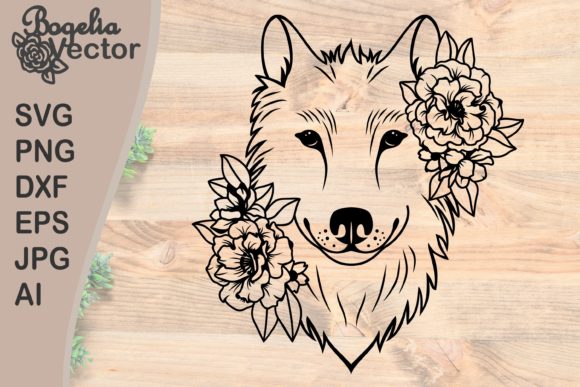
The design balances organic asymmetry with intentional flow. The wolf’s head is centered, but not rigid—its gaze slightly off-axis, softened by trailing florals (think foxgloves, ferns, and delicate vines) that curl into negative space rather than crowd the outline. There’s no heavy black outline or cartoonish simplification. Instead, it leans into subtle layering: petals rendered in soft satin stitch, stems in fine running stitch, and the wolf’s fur suggested through controlled fill stitch gradients. That nuance matters—it reads as handmade, not mass-produced. For an Etsy seller or small shop owner, that distinction builds immediate trust.
How It Performs on Real Projects
I ran Wolf Floral across five common substrates: midweight cotton twill (for patches), French terry (sweatshirt), lightweight rayon-blend (baby onesie), textured canvas (apron), and waffle-weave kitchen towel. On the sweatshirt? Excellent clarity—even at 4.2" wide, the floral details held up without excessive density. On the onesie? I scaled down to 3.1", used tear-away + cut-away stabilizer combo, and kept thread colors muted (heather grey wolf, sage green florals)—and it looked intentional, not compromised.
The design shines brightest on products where storytelling matters: nursery wall hangings, embroidered tea towels gifted at baby showers, or linen pillow covers for a forest-themed boutique. It also works surprisingly well on curved surfaces like structured caps—but only when hooped carefully and stitched with light-density fill areas. Avoid using it full-size on thin, stretchy knits unless you’re confident in your underlay strategy and stabilizer pairing.
Where to Use It Thoughtfully
Wolf Floral isn’t a one-size-fits-all embroidery file. Its charm lies in restraint—and that means knowing when *not* to push it:
- Small hoop sizes: Below 3" wide, some inner petal details blur. Test before committing to 2.5" patches.
- Textured or napped fabrics: On heavy fleece or bouclé, reduce fill stitch density by 10–15% to prevent puckering.
- Dark fabric backgrounds: The design relies on tonal contrast, not stark outlines—so test thread color combinations (e.g., charcoal grey on navy, not black on black).
- Frequent-wash items: Like baby bibs or kitchen towels—confirm stitch density allows for flexibility without fraying over time.
- Layered garments: On hoodies with thick pockets or seams near the embroidery zone, re-hoop precisely. The floral vines extend close to the edge—misalignment shows.
What It Adds to Your Craft Business
This isn’t just a pretty graphic—it’s a quiet brand amplifier. When customers see Wolf Floral on a handmade apron or holiday gift tag, they don’t just register “wolf + flowers.” They sense intention: a maker who values balance, nature-inspired calm, and refined execution. That perception lifts perceived value—especially for premium-priced items like personalized nursery decor or wedding weekend totes.
For Etsy sellers, it’s a strong candidate for bundled listings: pair the embroidery file with matching printable mockups (flat lay + lifestyle shots), suggest coordinating thread palettes, and highlight its versatility across categories—embroidered patch, sweatshirt embroidery, baby embroidery, even holiday embroidery when paired with seasonal accents like dried lavender sprigs in photos.
Practical Notes Every Embroiderer Should Check
Before stitching your first Wolf Floral project—or listing it in your shop—do these six things:
- Test on scrap fabric that matches your final substrate, using your actual machine and thread brands.
- Review stitch density in your editing software—look for tight clusters around the wolf’s eye or inner flower centers; adjust if needed for breathability.
- Confirm hoop size compatibility. If your smallest hoop is 4x4", know whether the design fits comfortably within that boundary—or if you’ll need to resize.
- Inspect small details at 200% zoom: are vine tips crisp? Do petal edges avoid tiny, un-stitchable points?
- Try black-and-white mockups—it reveals how well the design reads without color crutches.
- Verify licensing. Since this is a digital embroidery file sold as Graphics, confirm whether your intended use (e.g., selling finished embroidered totes or reselling the file itself) falls within permitted terms.
Final Thought: Not Just a Design—A Design Decision
Wolf Floral won’t shout from a crowded craft fair table. But it lingers. It invites closer looking. It supports thoughtful product positioning—not as a trend-chasing asset, but as a consistent, recognizable element across your craft business: same wolf motif on a tea towel, a baby cap, and a boutique gift card. That kind of cohesion builds recognition. And in a market saturated with generic SVGs, that’s rare.
If you’re choosing embroidery files for client work, wholesale orders, or your own growing line of handmade product, treat Wolf Floral as more than decoration. Treat it as part of your visual language—one that says, quietly and confidently, this was made with care.